Context
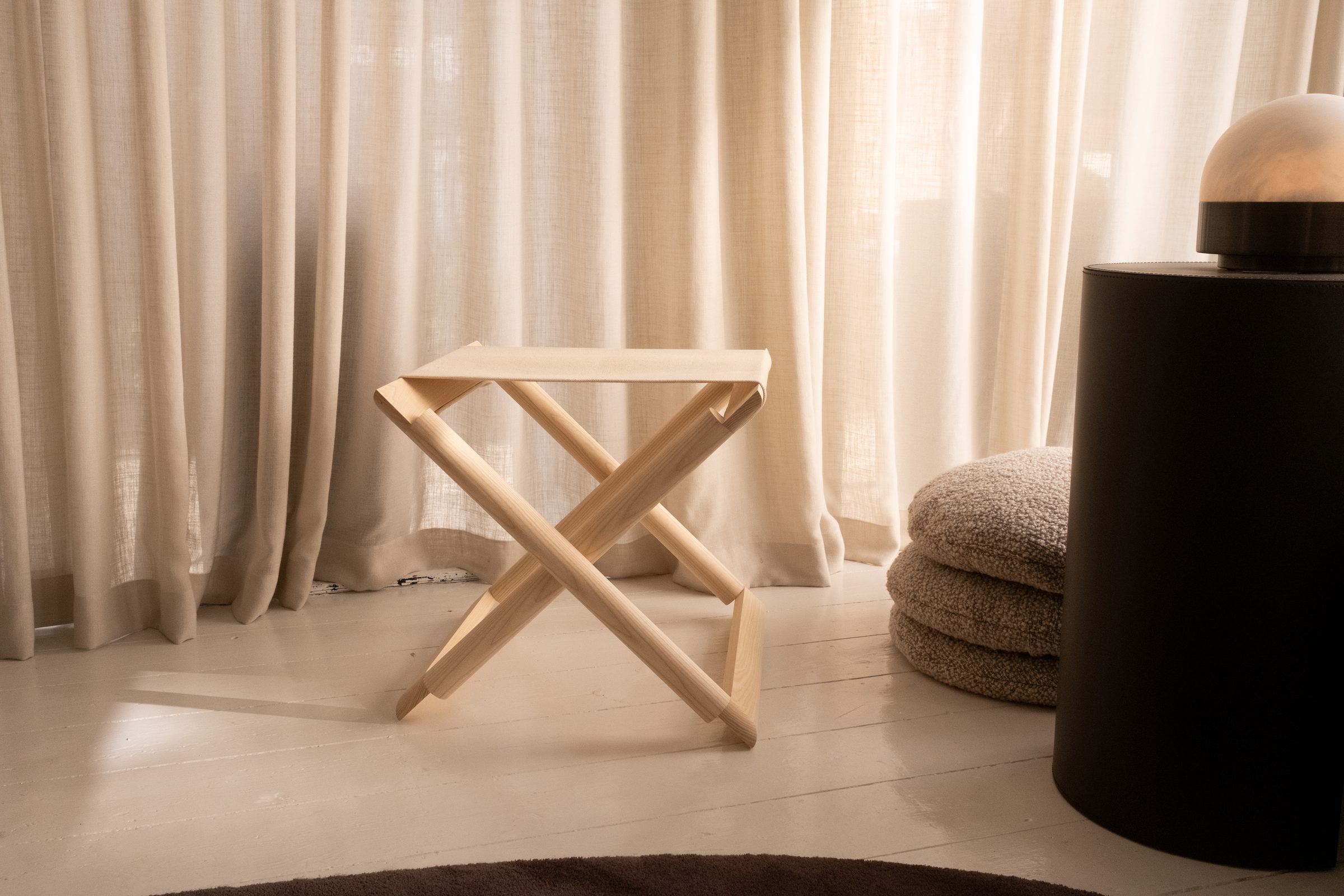
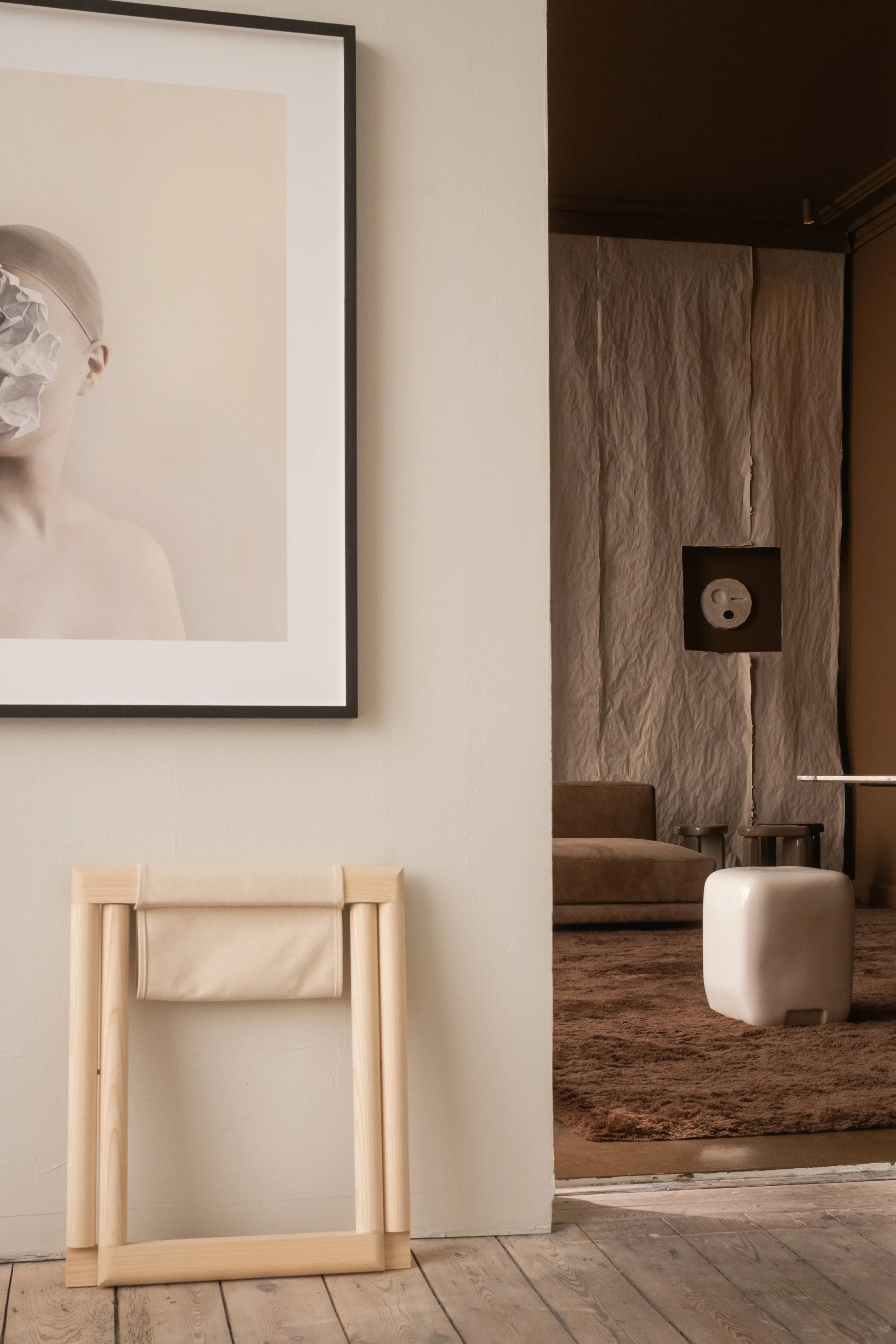
A folding stool that looks just as good closed as it does open.
Designed in Copenhagen during a semester abroad, the Frame Stool was made to solve a problem most folding furniture ignores — what it looks like when no one is using it. Inspired by Kaare Klint's Propeller Stool, it folds completely flat and hides its hinge, leaving only wood and canvas.

Inspiration

Kaare Klint, Copenhagen
"Function must be the starting point. Everything else follows."
Kaare Klint, Danish furniture designer
Klint's Propeller Stool, designed in 1927, demonstrated that a folding object could possess the same visual rigor as a fixed one. The Frame Stool takes that premise forward: a seat that collapses completely flat, hiding its hinge and reducing to wood and canvas.